
Children witnessing domestic abuse: the trauma that can last a lifetime
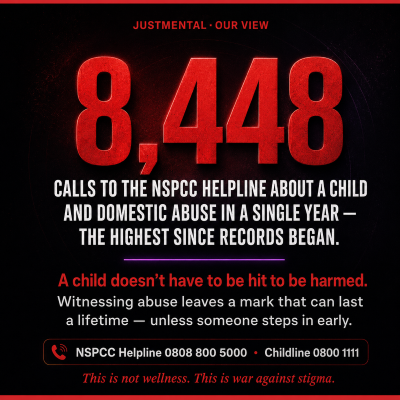
The harm done to children witnessing domestic abuse doesn’t stop when the shouting does, and new figures show more adults than ever are worried about it. The NSPCC, whose UK Helpline is based here in Belfast, has reported that contacts about a child experiencing domestic abuse have reached their highest level since records began: 8,448 child welfare contacts in the year to March 2026, up 8% on the year before and more than 80% since the charity started recording this in 2021/22. Almost a third, 2,709, were serious enough to be referred on to police or children’s social services.
Behind every one of those numbers is a child in a home where they should feel safest, and often don’t. The NSPCC’s Helpline Service Head, Paddi Vint, who is based in Belfast, described it as “alarming” that contacts have hit record levels.
Why children witnessing domestic abuse are victims too
It is worth saying plainly, because it is still too often missed: a child does not have to be hit to be harmed. Children witnessing domestic abuse, seeing it, hearing it through a wall, or simply living in the tension and fear it creates, are victims of that abuse in their own right. The law in Northern Ireland recognises this; the Domestic Abuse and Civil Proceedings Act treats children who experience the effects of abuse as victims, not bystanders.
The signs are not always obvious, and they are easily mistaken for something else. The NSPCC lists aggression, anti-social behaviour, bed-wetting, attention-seeking, tantrums, withdrawal and problems at school. A child acting out in class, or going silent, may be carrying something no one at school can see.
The mental health toll of childhood domestic abuse, into adulthood
This is where our concern runs deepest, and where a mental health platform has something to add. The impact of children witnessing domestic abuse does not end with childhood. Without support, the trauma can echo for decades. Decades of research into adverse childhood experiences, ACEs, shows that exposure to domestic abuse in the home is linked to a significantly higher risk, in adult life, of depression, anxiety, post-traumatic stress, substance misuse and self-harm. A frightened seven-year-old, unhelped, can become a struggling twenty-seven-year-old who has never understood why.
That is the case for early intervention, and it is overwhelming. Support a child while the wound is fresh, through a trusted adult, a school, a counsellor, a helpline, and you can change the entire trajectory of a life. Miss that window, and the cost is paid, quietly and for years, in adult mental ill-health, in relationships that struggle, and sometimes in the next generation. Prevention here is not soft. It is the single most cost-effective thing a society can do for its own future wellbeing.
What has to happen next
Northern Ireland has a Domestic and Sexual Abuse Strategy for 2024–2031 that, on paper, centres children and young people. The test, as with so much here, is whether it is funded and delivered, or left as words. Children affected by domestic abuse need timely access to specialist trauma support, not a place on a two-year waiting list. Schools need the training and the referral routes to spot the quiet child as readily as the loud one. And every adult needs to know that a worry about a child is worth acting on.
If you are worried about a child, you do not need to be certain, and you do not need to give your name. The NSPCC Helpline is there for exactly this, on 0808 800 5000. Speaking up can be the first step that changes a child’s whole future, and the adult they will one day become.
If you or a child you know is affected by domestic abuse, help is available. NSPCC Helpline 0808 800 5000 · Childline 0800 1111 · Lifeline NI 0808 808 8000 · In immediate danger, call 999.