
Social Media Curfew Northern Ireland: Will It Protect Teens?
Social media curfew in Northern Ireland: why a switch-off setting won’t protect struggling teens
The proposed social media curfew Northern Ireland’s older teens now face is part of a UK-wide plan to switch apps such as Instagram, TikTok and YouTube off by default for 16 and 17-year-olds between midnight and 6am. It is a proposal built on a real and welcome instinct, but for a curfew like this to mean anything for young people’s mental health, it has to be more than a setting they can switch off.
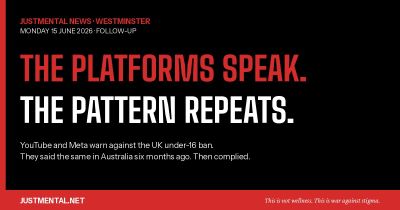
Announced alongside default limits on “addictive” features such as infinite scroll and autoplay, the curfew sits on top of the full under-16 social media ban due to take effect in spring 2027. The government points to its own trial of more than 300 teenagers, which found that overnight limits improved sleep. And that matters, because sleep is not a lifestyle nicety for a teenager, it is fundamental to adolescent mental health. Poor sleep and the endless loop of scrolling, anxiety and comparison feed directly into the low mood and anxiety that young people carry into our schools and services every week.
So we say clearly: going after addictive design, and protecting sleep, is the right target. Where progress is real, we credit it.
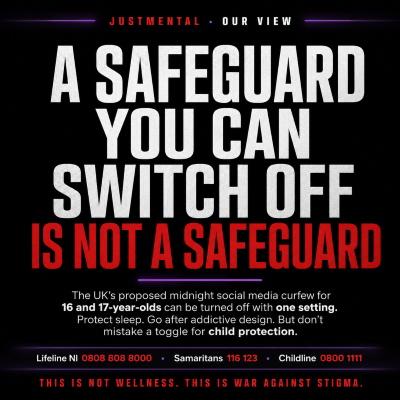
But here is the condition, and it is a serious one. A safeguard you can switch off is not a safeguard. Under this proposal, a 16-year-old need only change an account setting and the curfew disappears. One bereaved campaigner compared it to moving a bottle of alcohol slightly out of arm’s reach. The young people most drawn into compulsive night-time scrolling are precisely the ones most likely to opt out, and least protected by a default they can tap away in seconds.
There is a harder question underneath, too, raised by children’s digital-rights experts and one we take seriously. For some young people, the phone at 2am is not the problem, it is the lifeline. A child in distress reaching for support in the middle of the night must not be locked out of the one place they feel able to turn. Any curfew has to tell the difference between a platform pushing notifications to keep a tired teenager hooked and a frightened young person reaching out for help. Those are not the same thing, and a blunt switch treats them as though they were.
What the social media curfew Northern Ireland needs to work
This is where Northern Ireland cannot be an afterthought. Online safety law is largely reserved to Westminster, but the mental health consequences land here, in our schools, our children’s mental health waiting lists, and our emergency departments. Northern Ireland has among the highest suicide rates in the UK and Ireland. Our children’s mental health service waiting figures still are not routinely published. Primary-school counselling has been cut back. A curfew designed in London means little to a struggling teenager in Belfast or Ballymena if the support they are meant to turn to instead simply is not there.
Our position is straightforward. Go after the addictive design, hard, by default, and without an easy opt-out. Protect sleep. But do not mistake a settings prompt for child protection, and do not restrict young people’s access to support without funding the real thing to replace it. Safeguarding is not a toggle. It is a system, and the system is what Northern Ireland still has to build.
If you are struggling, you are not alone. Lifeline NI 0808 808 8000 · Samaritans 116 123 · Childline 0800 1111.