
World Menopause Day: 5 Essential Truths on Mental Health
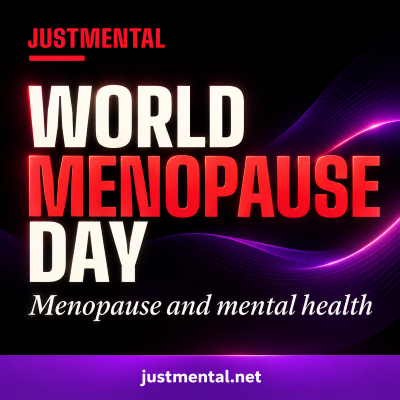
World Menopause Day falls on Sunday 18 October, and it is a chance to talk openly about a stage of life that affects millions of people yet is still too often met with silence. Menopause is not only about hot flushes. It can affect mood, memory, sleep and confidence, and it touches the people around you too.
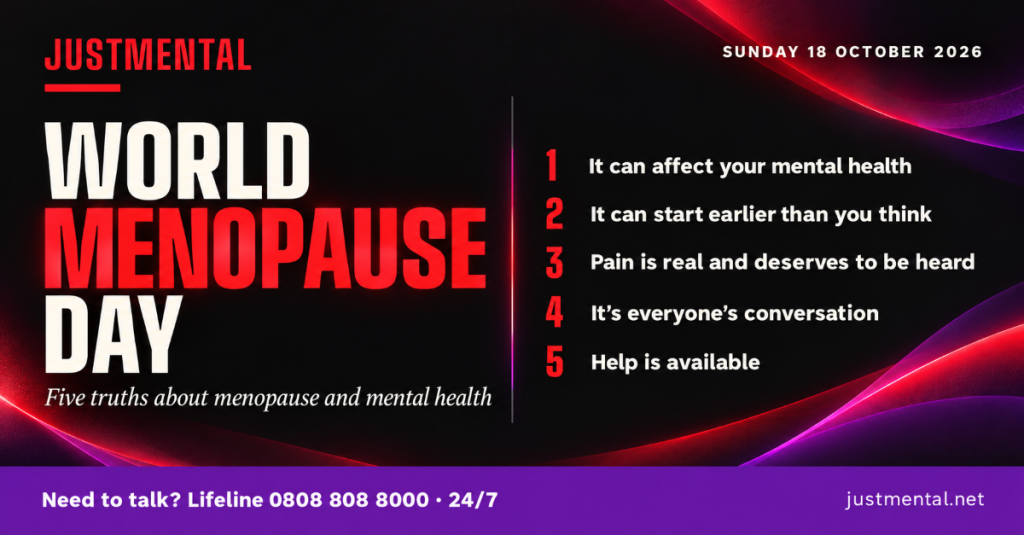
At JustMental, we believe mental health affects all walks of life, and menopause is a big part of that story. It affects anyone who has periods, and it matters just as much to partners, families, friends, colleagues and employers. Here are five truths about menopause and mental health that we think everyone should know this World Menopause Day.
What Is World Menopause Day?
World Menopause Day is marked every year on 18 October. It is led by the International Menopause Society (IMS), which chooses a theme each year to focus attention on a particular part of midlife health.
The 2026 theme is “Chronic Pain at Midlife”. The IMS says chronic pain affects a significant proportion of women during and after the menopause transition, yet it remains underestimated in both research and care. Its new White Paper, compiled by ten international experts, brings together the latest evidence alongside resources for women and anyone interested in midlife health.
1. Menopause Can Affect Your Mental Health
The NHS lists mood changes among the symptoms of menopause and perimenopause. You may have mood swings, low mood or depression, and you may notice problems with your memory or concentration. Anxiety is common too, and poor sleep can leave you feeling irritable, stressed and anxious.
As the Northern Ireland charity AWARE puts it in its guide to mental health and menopause, “Changes to women’s moods, emotions and state of mind during the perimenopause and menopause are extremely common.” If you recognise yourself in that, you are far from alone, and one of the aims of World Menopause Day is to make that easier to say out loud.
2. It Can Start Earlier Than You Think
According to nidirect, menopause usually happens between 45 and 55 years of age, but symptoms can begin months or even years before your periods stop. This stage is known as perimenopause, and the NHS says one of the first signs is usually a change to your periods.
Menopause can also happen earlier, and nidirect advises talking to your GP if your symptoms start before the age of 45.
Symptoms do not always pass quickly, either. The NHS says they usually last for seven to nine years, sometimes longer, and can change over time. Hot flushes may ease, for example, only to be replaced by low mood and anxiety.
3. Pain Is Real, and It Deserves to Be Taken Seriously
This year’s World Menopause Day theme shines a light on something many women live with quietly. The NHS lists muscle aches and joint pains among the possible symptoms of menopause, and it notes that joint pain may continue afterwards.
IMS President Professor Rossella Nappi has said that “women’s pain has too often been dismissed through gendered stereotypes, and labelled ‘emotional’ rather than properly investigated and treated.”
The IMS message for the day is simple: pain that cannot immediately be explained is still pain, and women should not feel they simply have to live with it. Not being believed can take its own toll on mental health, which is why being listened to matters so much.
4. Menopause Is Everyone’s Conversation
Menopause does not happen in isolation. It can affect relationships, family life and work, so understanding it is not just a job for the person going through it.
At work, the Equality Commission for Northern Ireland includes menopause in its workplace guidance for employers. Small adjustments and a manager who is willing to listen can make a real difference to someone’s confidence and wellbeing.
At home, partners, sons, daughters and friends all have a part to play. This World Menopause Day is a good moment to learn a little more and start the conversation.
5. Help Is Available
The NHS says early advice can help reduce the effects of menopause and perimenopause on your health, relationships and work. If your symptoms are troubling you, World Menopause Day could be the nudge to book that appointment with your GP.
According to nidirect, your GP can offer treatment for severe symptoms. For low mood and anxiety, this can include cognitive behavioural therapy (CBT), a type of talking therapy. If your symptoms do not improve after trying treatment, your GP can refer you to a menopause specialist.
Here in Northern Ireland, Menopause Together, Northern Ireland’s first menopause charity, runs events, educational workshops and information sessions, and offers a space to share experiences with others who understand. AWARE NI also has information and support groups for anyone affected by low mood or depression.
How to Support Someone Through Menopause
You do not need to be an expert to help. A few small things can make a big difference:
- Ask how they are, and really listen to the answer.
- Learn about the symptoms, including the less obvious ones like anxiety, brain fog and joint pain.
- Be patient with changes in mood or sleep, and try not to take them personally.
- Avoid jokes that turn real struggles into a punchline.
- Encourage them to speak to their GP if they are worried, and offer to go along if that would help.
Where to Find Support Right Now
If you are struggling, you do not have to wait for an appointment, or for World Menopause Day, to reach out.
Lifeline, Northern Ireland’s crisis response helpline, is available 24 hours a day, every day, on 0808 808 8000 (textphone 18001 0808 808 8000). Calls are free for people living in Northern Ireland from UK landlines and mobiles. Samaritans are also available on 116 123.
If you or someone else is in immediate danger, call 999.
To see what else is happening this month, read our October mental health awareness guide and our ADHD Awareness Month article
World Menopause Day is a reminder that no one should have to go through this stage of life in silence. Whether you are going through it yourself or supporting someone who is, the conversation matters, and it does not have to end when the day does.