
Northern Ireland Mental Health Strategy ‘Will Never Be Delivered’
Northern Ireland’s Mental Health Champion Says the Strategy Will Never Be Fully Delivered
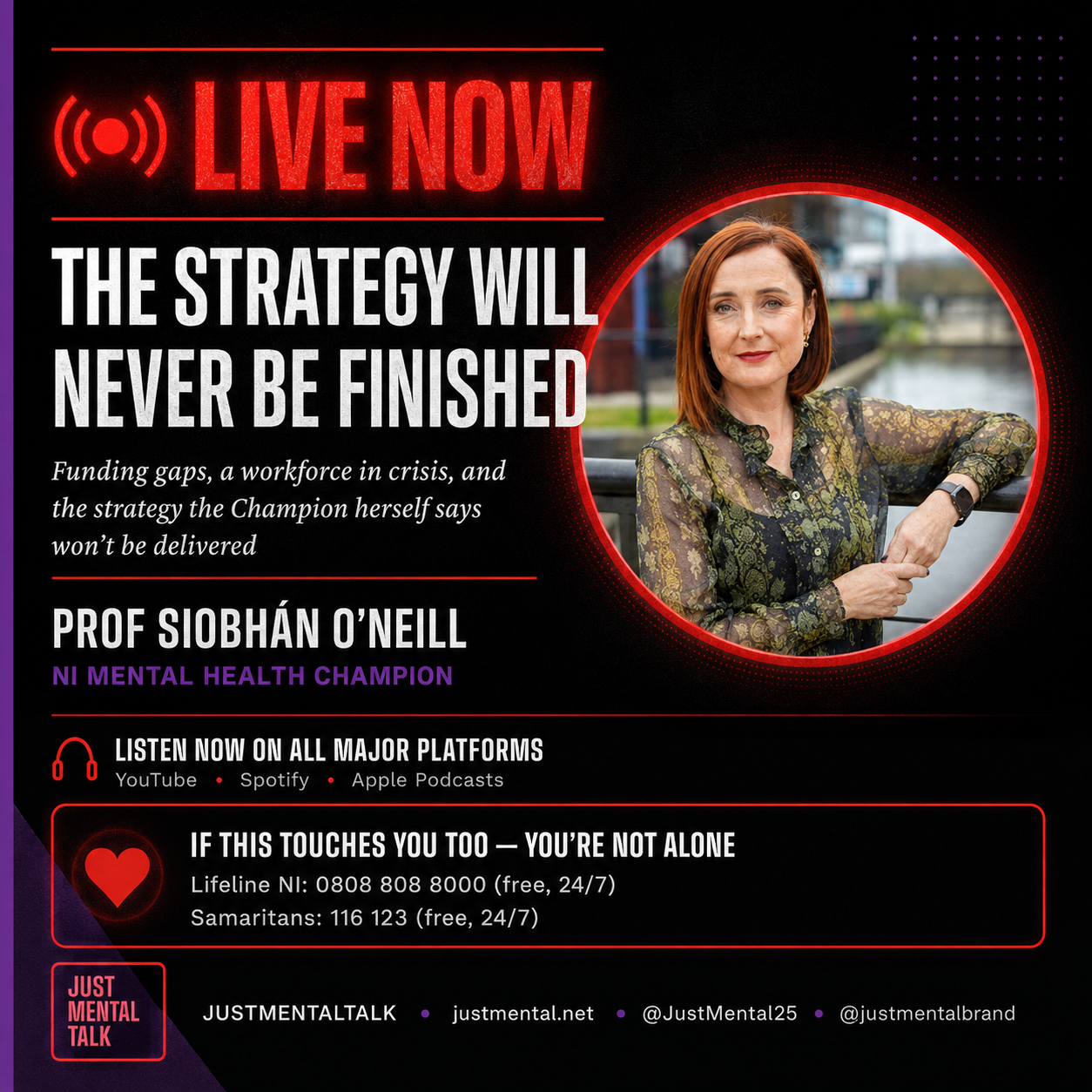
The Northern Ireland Mental Health Strategy will never be delivered in full, according to the woman appointed to champion it. Professor Siobhán O’Neill, Mental Health Champion for Northern Ireland since 2020, told JustMentalTalk host Karl Bennett that six years after the £1.2 billion, ten-year Strategy was launched, only £12.3 million, 16% of what was needed for the period, has actually been delivered.
“It will not be implemented in full,” is how the conversation is framed, and the figures behind that statement are Professor O’Neill’s own. In October 2025, a Department of Health review into the Strategy’s deliverability confirmed that 15 of its 35 original actions have not begun at all, for lack of funding. Professor O’Neill herself described that review as “disastrous” at the time.
A Workforce Under Strain
The conversation turns next to Northern Ireland’s psychiatry workforce, where the picture is similarly stark. The Royal College of Psychiatrists’ most recent workforce census found 29% of consultant psychiatry posts in Northern Ireland are vacant or covered by locum doctors, and around a third of specialty and specialist (SAS) posts are not permanently staffed. A statutory workforce review commissioned as part of the Strategy found the workforce needs to grow by 45% simply to meet existing statutory obligations, a target that, without new funding, has no realistic route to being met.
The Funding Gap With England
Northern Ireland spends around £212 per person on mental health services, compared with £264 per person in England, despite the NI Audit Office finding mental illness prevalence here around 25% higher than in England. Professor O’Neill has long argued that Northern Ireland’s particular history, including the transgenerational impact of Troubles-related trauma, makes this gap harder to justify, not easier.
Crisis Response and JustMental’s 107 a Day Campaign
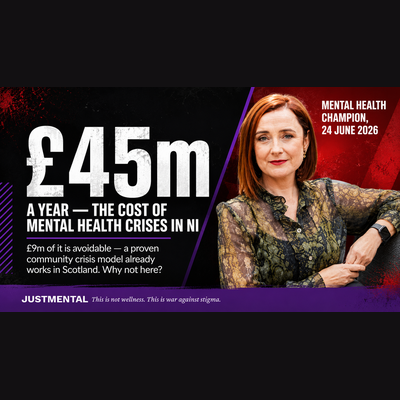
One of the more striking moments in the conversation is how closely Professor O’Neill’s own research lines up with JustMental’s 107 a Day campaign. Her report, The Economic Case for a Mental Health Regional Crisis Intervention Service in Northern Ireland, published in June 2026, put a £45 million annual price tag on mental health crises in Northern Ireland and found that a Distress Brief Intervention-style service could save £9 million of that, funding that, as of this interview, still has not been allocated. That finding sits alongside PSNI evidence that officers now receive close to 40,000 concern-for-safety calls a year, only 3% of them crime-related, at an estimated cost to policing of around £4 million annually.
Suicide Statistics and Troubles-Related Trauma
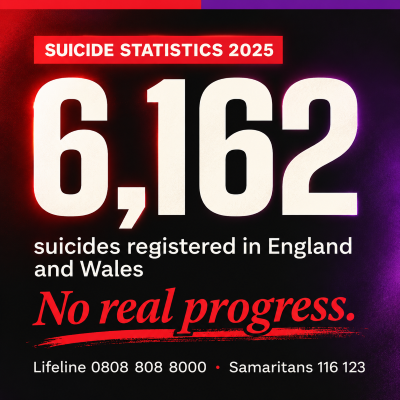
NISRA’s most recent figures show 290 suicides registered in Northern Ireland in 2024, with the three-year rolling average climbing from around 205 in 2017 to 238 now. Professor O’Neill, whose academic research at Ulster University has focused heavily on the transgenerational transmission of Troubles-related trauma, connects the two directly: a 2008 study she led found 39% of the Northern Ireland population had experienced a conflict-related traumatic event, and more recent research shows rising rates of complex PTSD and adverse childhood experiences in the generation born after the Troubles officially ended.
‘No Real Power’: A Champion Without Statutory Authority
The conversation does not shy away from the uncomfortable question of what the Mental Health Champion role can actually achieve. When the office was created in 2020, a legislative option that would have given the role statutory powers, similar to Northern Ireland’s Children’s Commissioner, was considered and rejected. Six years on, Professor O’Neill remains a well-evidenced, high-profile voice with no legal power to force government to act on what she recommends.
What She Would Say to Someone Struggling Right Now
The episode closes on a more personal note, with Professor O’Neill addressing anyone watching who feels the system has failed them and that there is nowhere left to turn. As with every JustMentalTalk episode, this conversation follows Samaritans media guidelines throughout, and Lifeline NI is signposted on screen.
Watch the full conversation on JustMentalTalk, out now.
If you or someone you know needs support, Lifeline NI is available on 0808 808 8000, free, 24 hours a day. Samaritans can be reached on 116 123.