
Suicide Prevention Funding: 1 Report Stormont Can’t Ignore
Suicide prevention funding: why a new Stormont report says it can’t be health’s job alone
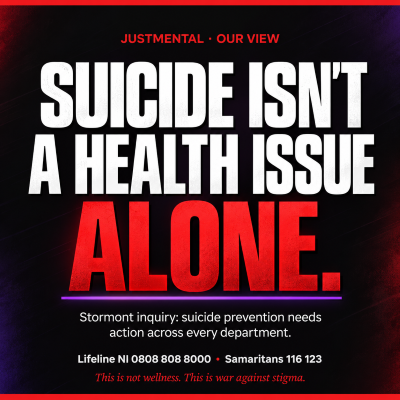
Suicide prevention funding in Northern Ireland has to be shared across government, not left to the health system alone, that is the central message of a report launched at Stormont this week. On Tuesday 23 September 2026, the All-Party Group (APG) on Suicide Prevention, supported by Samaritans, published the findings of its inquiry into how suicide prevention is funded across departments. Its conclusion is as simple as it is overdue: if the causes of suicide reach far beyond healthcare, then the funding to prevent it must too.
The report was launched by Órlaithí Flynn MLA, Chair of the All-Party Group on Suicide Prevention. “Behind every one of the 290 suicide deaths registered in 2024 is a person, a family and a community whose lives have been changed forever,” she said. “We cannot allow those figures to become something we simply accept.”
What the suicide prevention funding inquiry found
The inquiry’s core finding is that Northern Ireland’s funding and governance arrangements have not kept pace with how suicide prevention is actually delivered. Much of that work now happens through community and voluntary organisations, volunteers, and people with lived experience, often on short-term, insecure funding that leaves vital services unsure from one year to the next whether they will survive. As Flynn put it, the causes of suicide “extend far beyond healthcare. Poverty, housing, education, employment, trauma and social isolation all play a part, and tackling those issues requires action right across Government.”
That is the case for a cross-departmental approach, spreading responsibility and investment across Health, Communities, Justice, Education and the Economy, rather than treating suicide as a health problem to be solved by the health budget alone. It is a principle JustMental has argued for repeatedly: you cannot ask an under-funded health system to carry, by itself, a crisis that is rooted in the whole of society.
The suicide prevention funding recommendations
The report sets out practical, evidence-informed recommendations. Chief among them: a fair funding package that can be directed into tackling the mental health crisis, and, crucially for accountability, more regular meetings of the Executive Working Group on Wellbeing, Mental Health and Suicide Prevention, to drive collaboration, leadership and progress. “These are practical, evidence-informed recommendations that recognise suicide prevention as a shared responsibility,” Flynn said. “If we are serious about saving lives, then our approach to funding, leadership and accountability must reflect that reality.”
The human weight behind those recommendations was present at the launch. Campaigners with direct, personal experience of losing loved ones to suicide spoke about community services living hand-to-mouth. One warned simply: when services close, they do not reopen. That is the cost of insecure funding, measured not in spreadsheets but in the support that quietly disappears from a community that was relying on it.
Why this matters, and what should happen next
There were 290 registered suicide deaths in Northern Ireland in 2024, up from 221 the year before, an increase of around 31%. Men accounted for more than three-quarters of them, and suicide remains the leading cause of death for men under 50 here. Against numbers like those, a report that reframes suicide prevention as everyone’s responsibility is not abstract policy. It is a roadmap for keeping people alive.
So what should happen next? The recommendations must not gather dust, as too many NI reports have. The Executive Working Group should meet regularly and publicly account for progress. Community and voluntary services need multi-year funding certainty, not annual cliff-edges. And the cross-departmental principle should be built into how every relevant department budgets, not bolted on afterwards. JustMental will be watching for exactly that, and holding it to account, because a report is only as good as what follows it. We will keep asking the question this inquiry puts to the whole of government: if suicide prevention is everyone’s responsibility, when will everyone’s budget reflect it?
If you or someone you know is struggling, you are not alone. Lifeline NI 0808 808 8000 · Samaritans 116 123 · CALM 0800 58 58 58 · Text SHOUT to 85258.